Rock & retaining walls
Rock & Retaining Walls
Boulder walls, block retaining walls and terraced slopes, built on a real base with real drainage so they hold the hill instead of joining it.
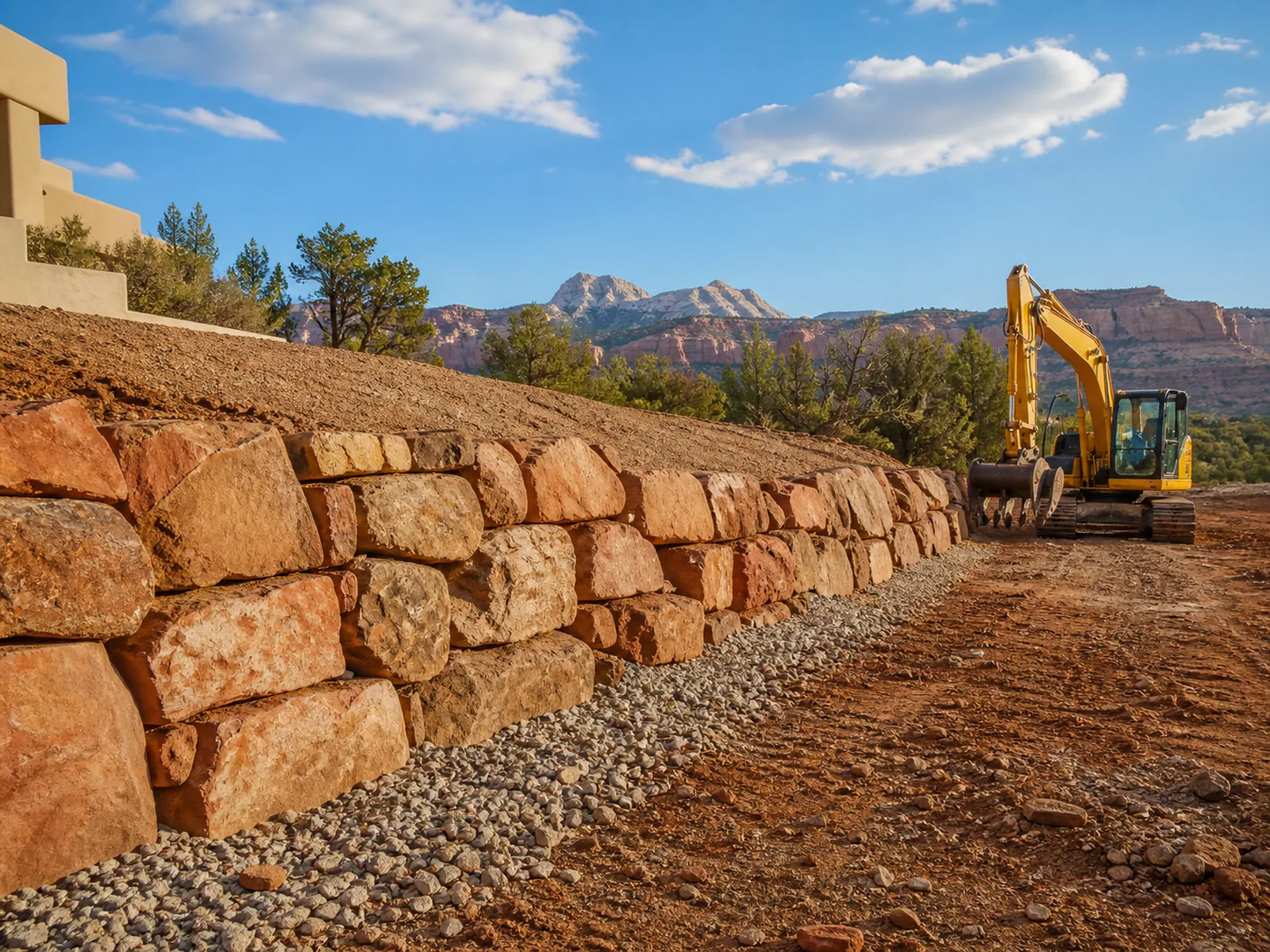
What we build
Hold the slope, gain the yard.
A retaining wall is doing structural work. It is holding back tons of soil that would rather be somewhere else. Built right, it turns an unusable slope into flat, usable yard and stays put for decades.
We build boulder walls from local sandstone, block and segmental walls where the look calls for it, and terraced walls where one tall wall would be the wrong answer.
Wall types
- Dry-stacked sandstone boulder walls
- Segmental block retaining walls
- Terraced and stepped walls on steep lots
- Cut-and-fill walls to level a building pad
- Slope armoring and erosion control
- Landscape and planter walls
Local ground
A rock wall fails when water gets behind it.
Almost every failed wall in this valley failed the same way: water built up behind it and the ground moved. We plan for three things before the first boulder is set.
Boulders
Local red and tan sandstone is the material of choice here, and it is heavy and irregular. Setting it takes an excavator with a thumb and an operator who has placed a few hundred of them, not a skid steer and hope.
Drainage
Every wall we build gets drain rock behind it and a path for water to leave. Skip that and hydrostatic pressure walks the wall out one wet winter at a time.
Expansive clay
If the slope behind the wall is blue clay, it swells when it gets wet and pushes hard. That changes the batter, the base width, and on taller walls whether it needs an engineer at all.
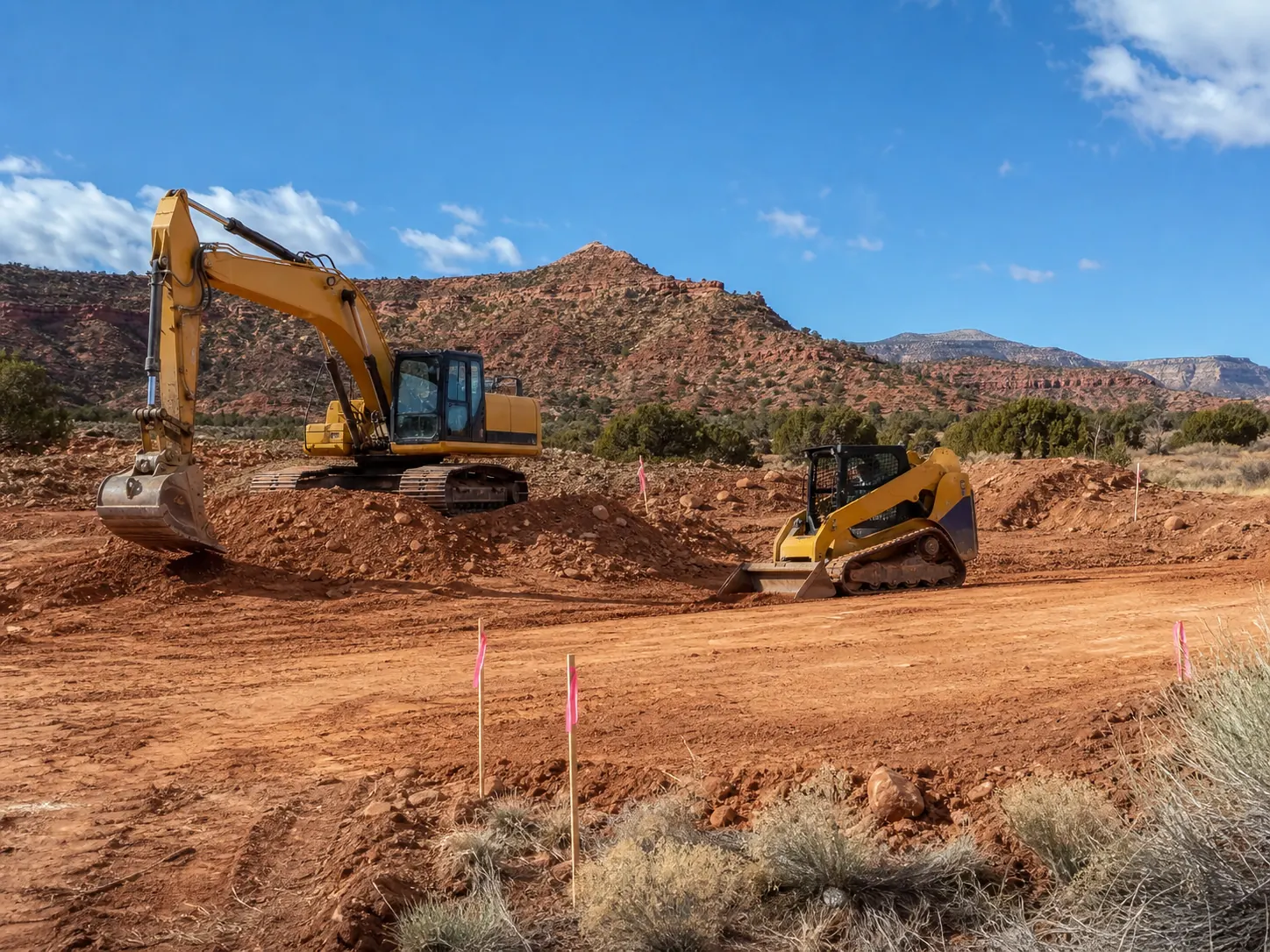
Why walls fail
Drainage, base, and batter.
Walls out here rarely fail because the rock was wrong. They fail because water collected behind them, or the base was never compacted, or the wall was stacked straight up instead of leaned back into the hill.
Every wall we set gets a compacted base below grade, drain rock behind it, and a batter that leans into the slope. On taller walls, or where what sits above the wall matters, we will tell you when it needs an engineer rather than guessing.
How we build
- Compacted base trench below finish grade
- Drain rock and a real outlet for water
- Each course keyed and leaned into the slope
- Backfill compacted as the wall goes up
- Big stone set with an excavator and thumb
- A straight answer on when an engineer is required
FAQ
Common questions
How tall can a retaining wall be before it needs an engineer?
It depends on your jurisdiction, the slope, and what is loading the wall from above. Many places set the trigger around four feet, and a driveway or structure above the wall can lower it. We'll tell you what your city or county requires before you commit to a design.
Boulder wall or block wall, which is better?
Boulder walls suit rural lots, big slopes and a natural look, and they can often use rock already on your property. Block walls give you crisp lines and consistent height for a finished yard. Both work; the lot and the look usually decide.
Can you use the rock already on my property?
Often, yes, and it saves money twice: you don't pay to haul it off, and you don't pay to import stone. We look at what is on the lot during the estimate.
Why does drainage matter so much?
Because saturated soil is heavier, and if it is blue clay it swells. Water behind a wall with nowhere to go is the single most common reason walls lean, bulge and eventually come apart.
Free estimate
Tell us about the job.
Fill this out and we’ll call you back. Prefer to talk? Call (702) 289-7016.
- Site visits and estimates are free anywhere in our service area
- Residential, commercial and agricultural
- Serving Apple Valley and all of Washington County