Concrete & flatwork
Concrete, Flatwork & Driveways
Driveways, patios, sidewalks, RV pads and slabs, poured over a subgrade we excavated and compacted ourselves, so the slab and the ground under it are one company’s problem.
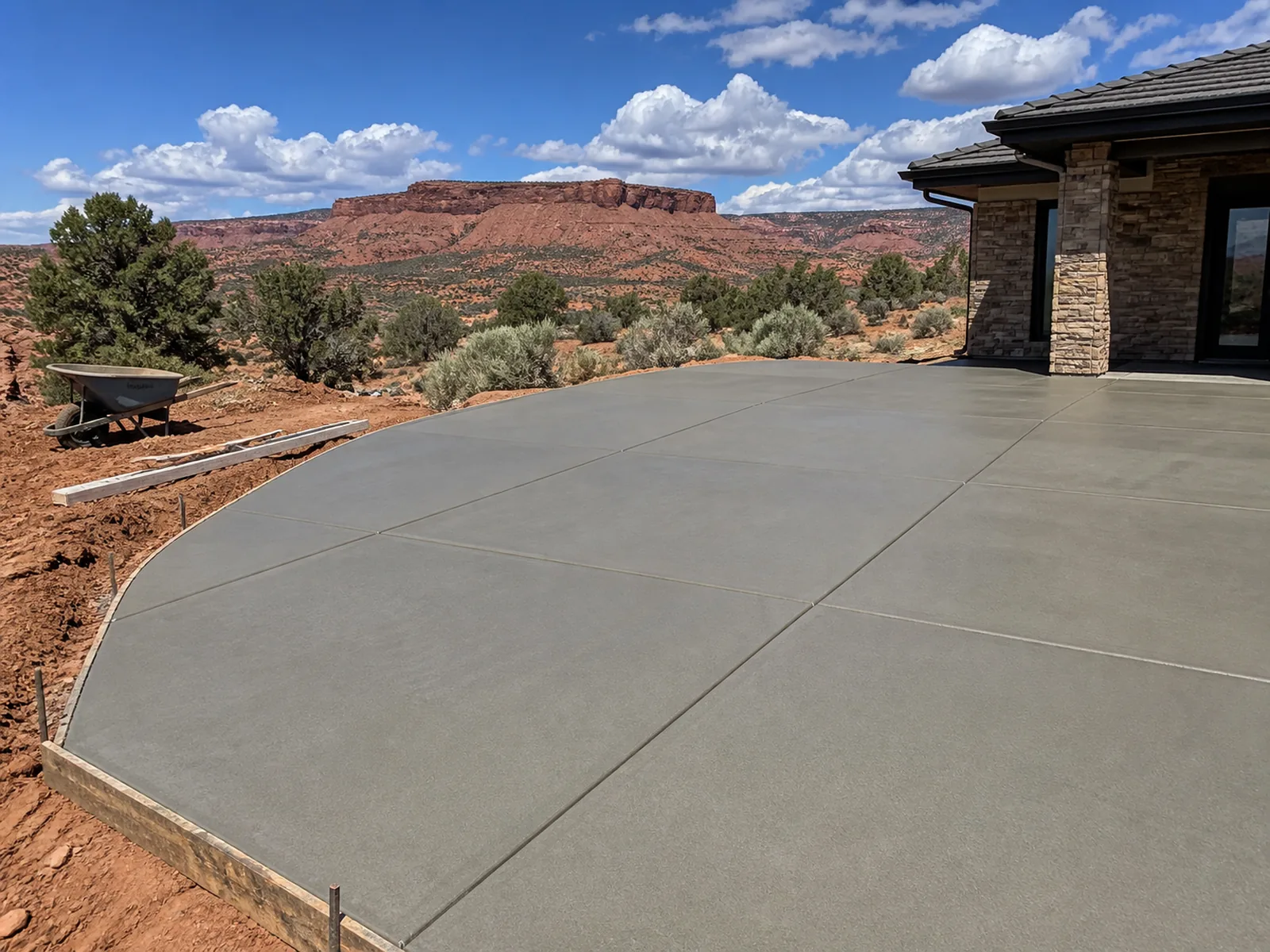
What we pour
Flatwork, start to finish.
Most concrete cracks because of what is underneath it, not what is in it. We do the dirt work and the flatwork, which means the base under your driveway was compacted by the same crew that has to answer for the slab.
Driveways, patios, walkways, RV and equipment pads, shop and shed slabs, approaches and steps. We form it, pour it, finish it and cut the joints.
Flatwork we do
- Concrete driveways and approaches
- Patios and outdoor living slabs
- Sidewalks and walkways
- RV, trailer and equipment pads
- Shop, shed and garage slabs
- Steps, curbing and edge work
Local ground
Flatwork lives or dies on what is under it.
A driveway or patio is a thin slab sitting on the ground out here. Three things crack it, and all three get handled before anyone pours.
Blue clay
Expansive Chinle clay heaves and cracks driveways and patios more reliably than anything else around St. George, Santa Clara and Washington. Where it is present the fix is removing it and rebuilding the subgrade with compacted granular fill.
Compaction
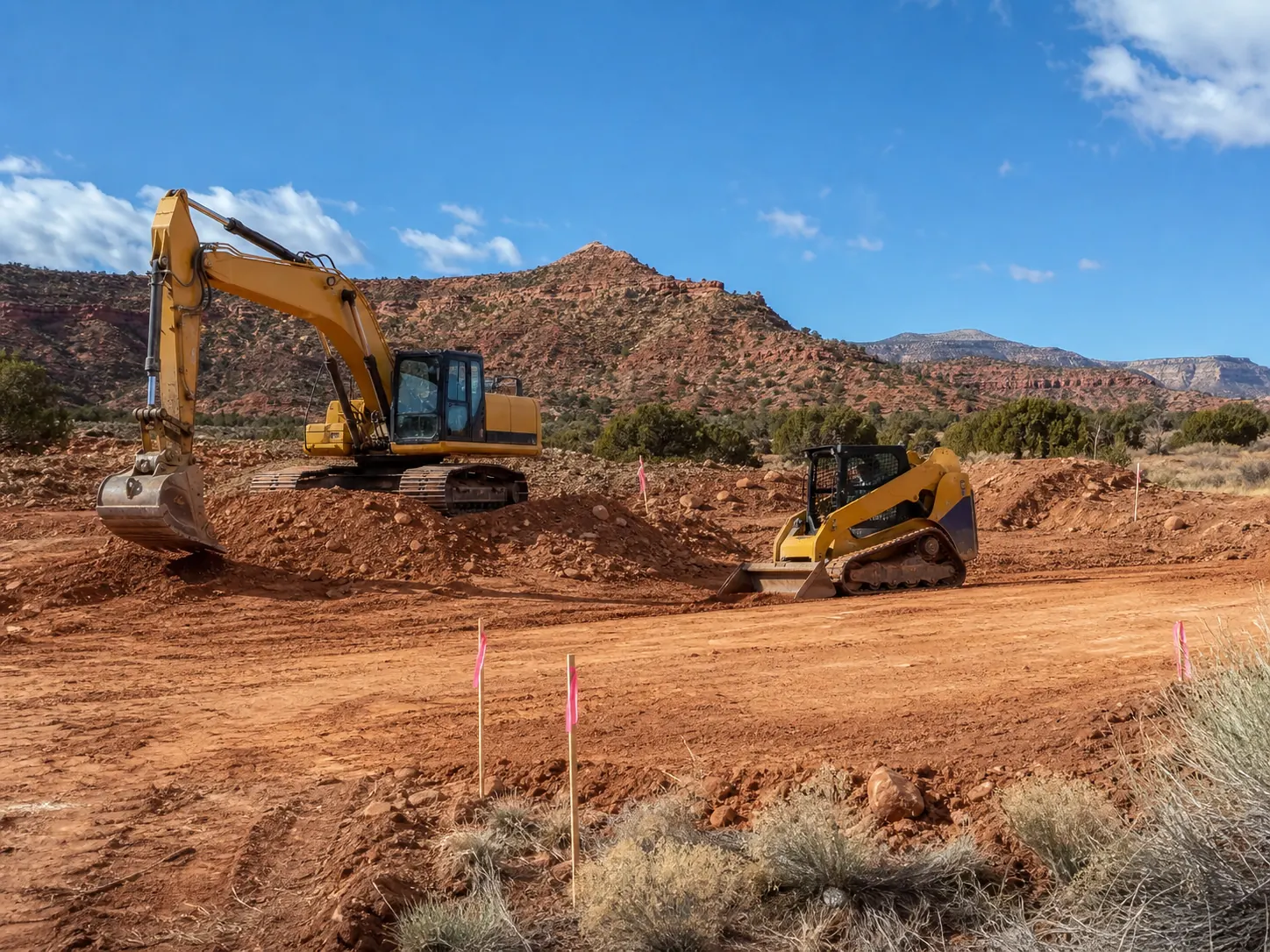
Loose or uneven fill under a slab settles and cracks it. We compact in lifts and prove the base before forms go up, which is the whole advantage of the dirt work and the flatwork being the same company.
Drainage & joints
Every slab gets pitched so monsoon runoff leaves the structure instead of pooling against the foundation, and control joints go in on a real spacing so the slab cracks where we told it to.
Base first
The part that decides whether it cracks.
Before a form goes up, the subgrade gets excavated to depth, bad material gets removed, and the base gets compacted in lifts. Where blue clay shows up, it comes out and gets replaced with granular fill that does not swell.
Then the slab gets the thickness the use calls for, reinforcement where it matters, a real slope for drainage, and control joints on a spacing that decides where it cracks instead of leaving it to chance.
How we pour
- Subgrade excavated and compacted in lifts
- Bad or expansive material removed, not buried
- Thickness matched to the load; an RV pad is not a walkway
- Reinforcement where the job calls for it
- Slope for drainage away from the structure
- Control joints cut on a real spacing
FAQ
Common questions
Why do driveways crack around St. George?
Usually expansive blue clay from the Chinle formation. It absorbs water, swells, and lifts the slab from below. Around St. George, Santa Clara and Washington it is the most common cause of cracked driveways and heaved patios. The fix is removing it and rebuilding the base with compacted granular fill, before the pour.
Do you do the excavation and the concrete, or just the concrete?
Both, and that is the point. The base under your slab was compacted by the same crew that pours and finishes it, so there is nobody to point a finger at between the dirt contractor and the concrete contractor.
How thick should my driveway be?
Thicker for whatever you park on it. A car driveway and an RV or equipment pad are not the same slab. We size the thickness and the reinforcement to what is actually going to sit on it.
Will my new concrete crack?
Concrete cracks; that is what it does. The job is controlling where. Control joints on a proper spacing, a compacted base and good drainage mean it cracks in the joints instead of across the middle of your patio.
Free estimate
Tell us about the job.
Fill this out and we’ll call you back. Prefer to talk? Call (702) 289-7016.
- Site visits and estimates are free anywhere in our service area
- Residential, commercial and agricultural
- Serving Apple Valley and all of Washington County